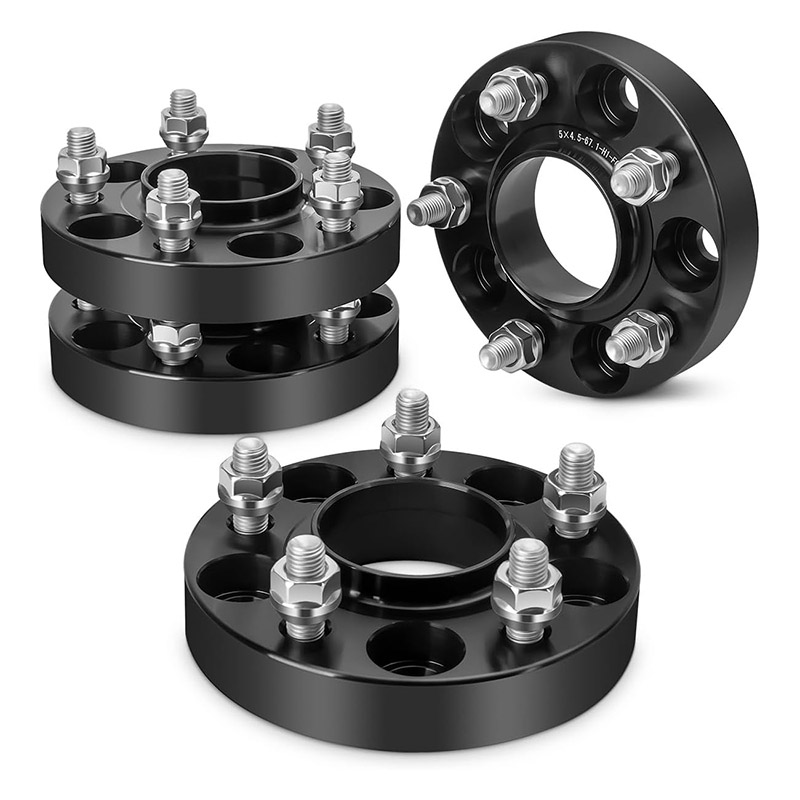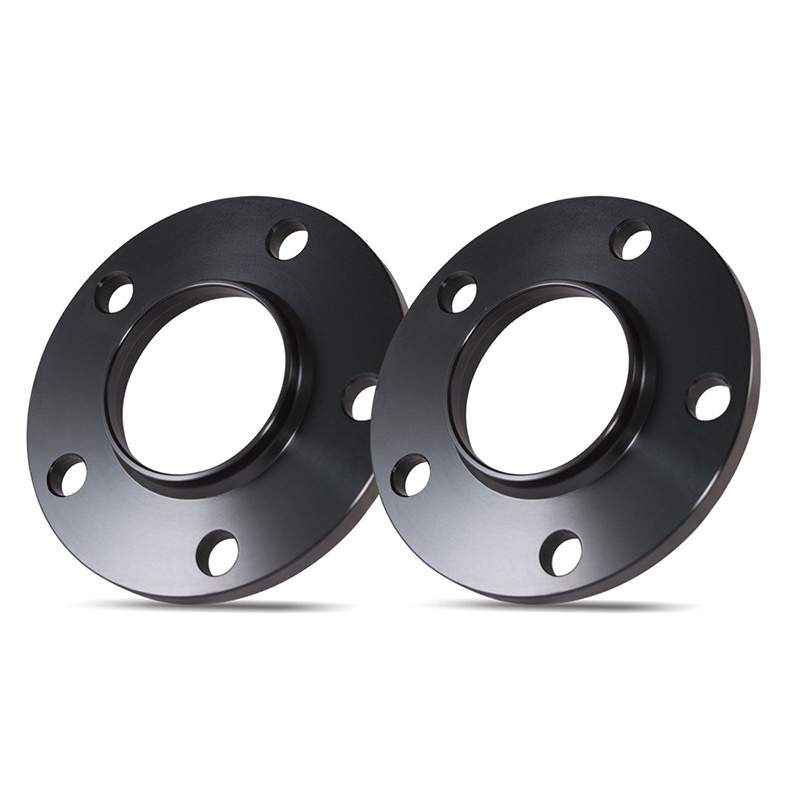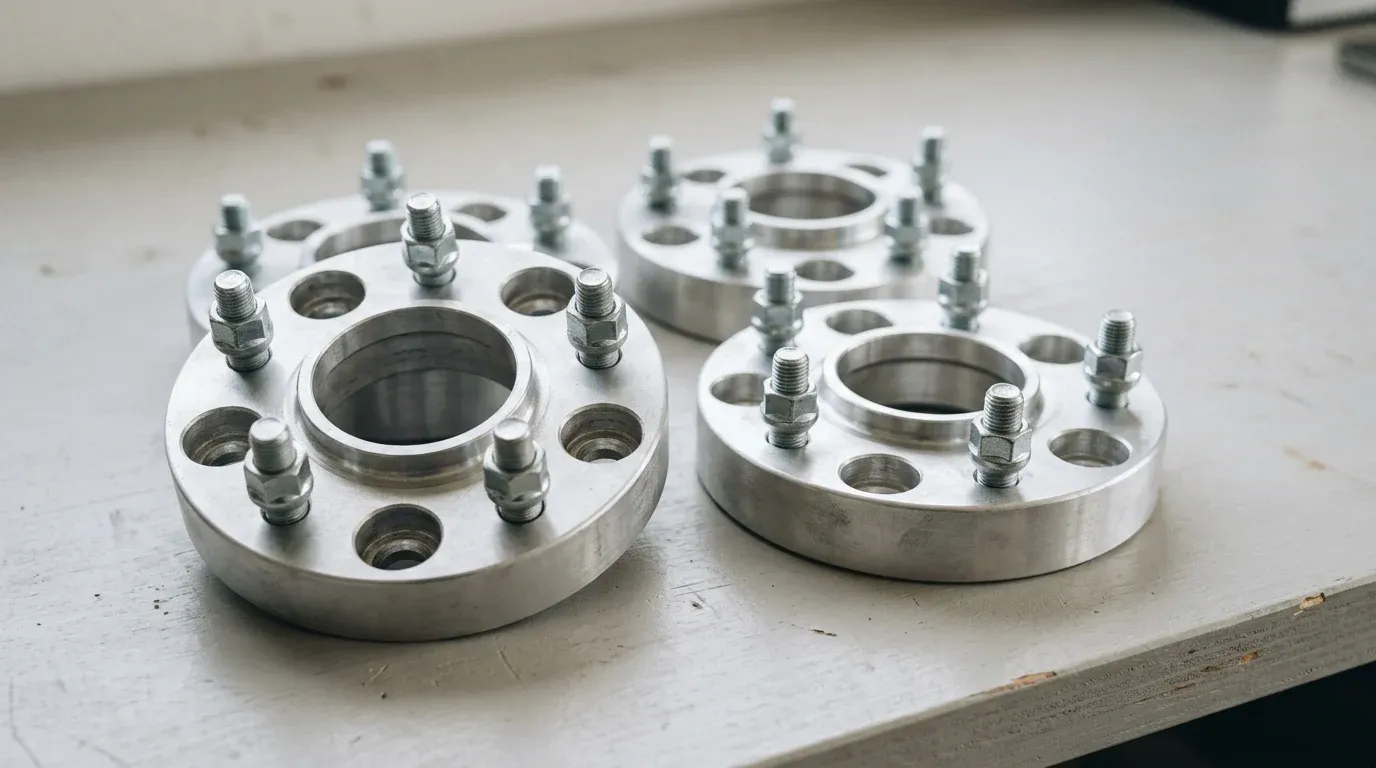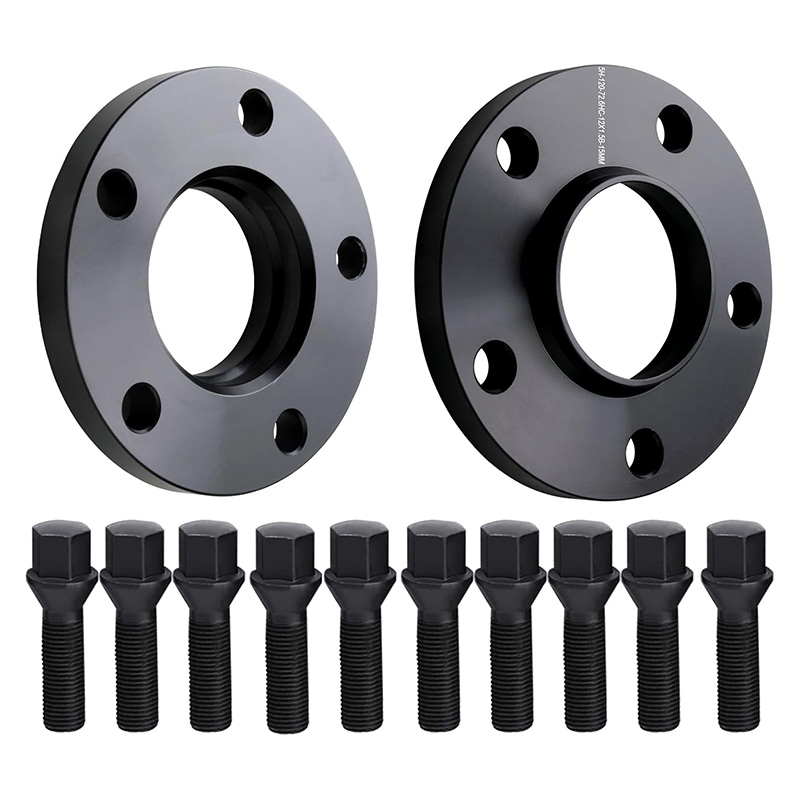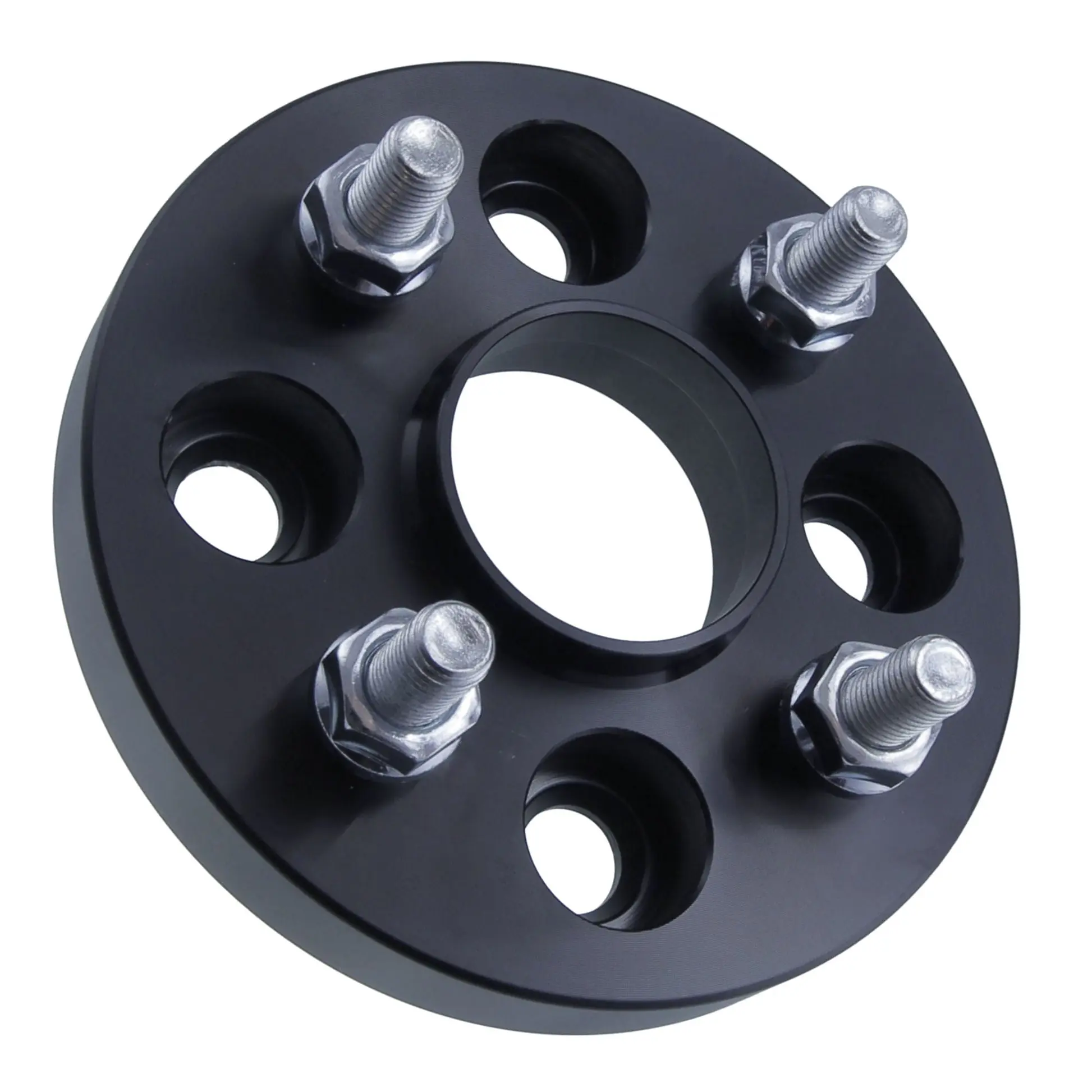
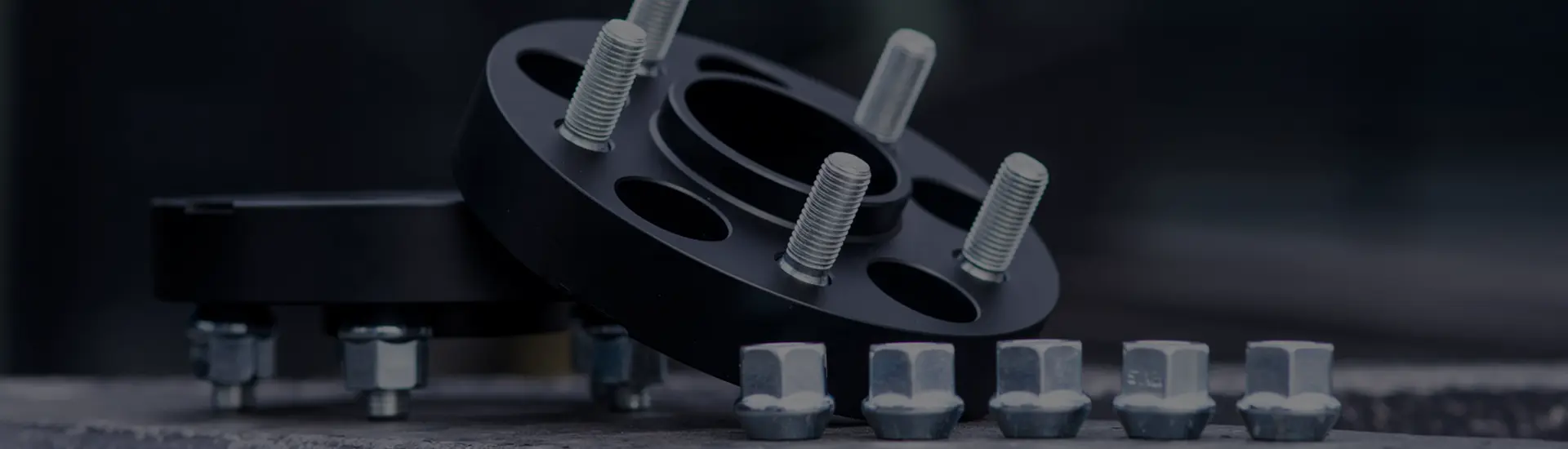

When upgrading wheels, achieving proper offset and stance often requires the use of precision-engineered spacers. A 5 Hole Hub Centric Spacer is a forged or CNC-machined ring installed between the wheel hub and the vehicles wheel mounting surface. Unlike generic flat spacers, a hub centric design incorporates a raised lip that matches the hub diameter perfectly, transferring the vehicle load directly through the hub instead of relying solely on the wheel studs. This eliminates vibration, improves safety, and ensures a factory-like fit. These components are most commonly used on vehicles with 5-lug bolt patterns, such as the popular 5x100, 5x112, 5x114.3, 5x120, and 5x127 configurations, found across countless cars, crossovers, and light trucks. For drivers seeking wider track width, brake caliper clearance, or a more aggressive wheel flush, the 5 hole hub centric spacer is an essential upgrade. Junwei produces these spacers to exacting tolerances, using aerospace-grade materials and rigorous quality control to meet the demands of both street and track applications.
Many budget wheel spacers are lug centric, meaning they center the wheel based only on the lug nuts. While they may appear to work initially, they often lead to high-speed vibrations, uneven torque distribution, and premature bearing wear. A 5 hole hub centric spacer solves these issues by providing a continuous and precise interface between the vehicle hub and the wheel center bore. As weight and rotational forces transfer through the sturdy hub ring, the wheel studs are no longer burdened with both clamping force and load-bearing alignment. This design drastically reduces the risk of stress cracking on the studs and prevents the steering wheel shake commonly associated with improperly fitted aftermarket wheels. Junwei spacers are meticulously bored on CNC lathes to guarantee concentricity within 0.02mm, ensuring a vibration-free ride even at highway speeds. The additional benefit is easier wheel installation, as the hub centric lip holds the spacer perfectly in place while the wheel is mounted.
When evaluating a 5 hole hub centric spacer for your specific vehicle, understanding the precise specifications is critical. Below are the standard parameters that define Junwei spacers, along with typical ranges available.
This table illustrates common configurations Junwei manufactures. Use these as a reference for your ordering process; exact measurements should be confirmed with a digital caliper on your vehicle.
| Vehicle Platform (Example) | Bolt Pattern | Hub Bore (mm) | Spacer Thickness (mm) | Type | Junwei Part Number |
|---|---|---|---|---|---|
| VW Golf Mk7 / Audi A3 | 5x112 | 57.1 | 10, 15, 20 | Bolt-On | JW-5H112-571-XX |
| BMW E90 / F30 (non-M) | 5x120 | 72.56 | 12, 18, 25 | Bolt-On | JW-5H120-725-XX |
| Ford Mustang (S550) | 5x114.3 | 70.5 | 20, 25, 30 | Bolt-On | JW-5H114-705-XX |
| Subaru WRX / STI | 5x114.3 | 56.1 | 15, 20 | Bolt-On | JW-5H114-561-XX |
| Toyota Tacoma / 4Runner | 5x127 / 5x5" | 106.1 | 25, 32, 38 | Bolt-On | JW-5H127-1061-XX |
| Porsche Cayenne (955) | 5x130 | 71.6 | 17, 23, 30 | Bolt-On | JW-5H130-716-XX |
| Chevrolet Camaro (6th Gen) | 5x120 | 66.9 | 20, 25 | Bolt-On | JW-5H120-669-XX |
Note: “XX” denotes thickness code. Always verify center bore and stud length before installation.
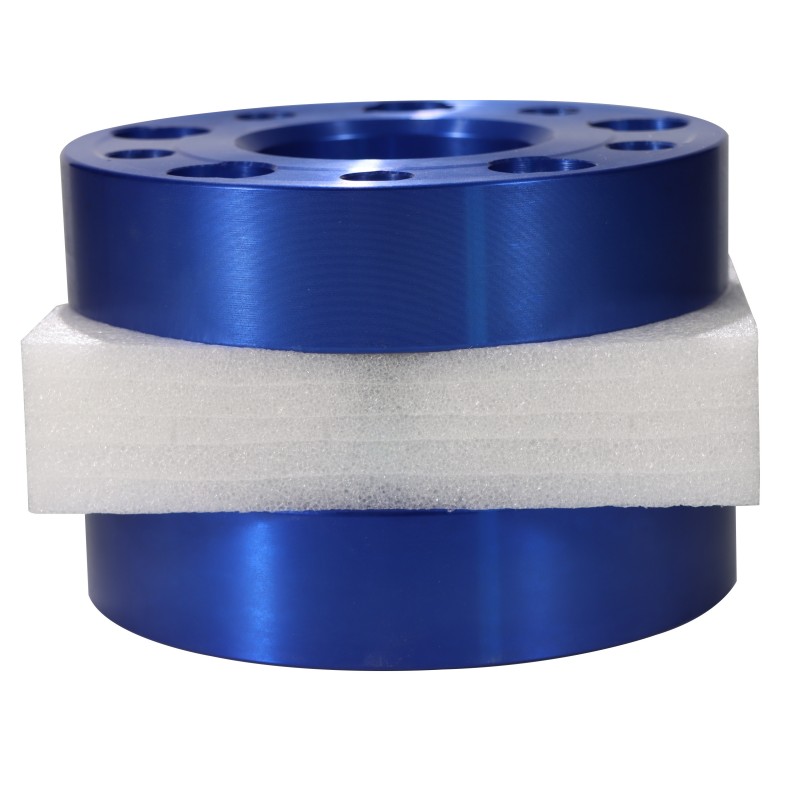
Junwei takes pride in an industry-leading production workflow that begins with SGS-certified billet aluminum rods. Each batch is traced from casting to final assembly. The process involves multi-axis CNC machining centers that drill bolt holes and machine the center bore in a single clamping operation, ensuring perfect concentricity. After machining, components undergo a proprietary deburring and vibratory finishing cycle to eliminate micro-stress risers. Hard anodizing is performed in-house under strict temperature control, resulting in a uniform 25-50 micron layer that resists chemicals and road salts. Every 5 hole hub centric spacer passes a coordinate measuring machine (CMM) inspection before receiving its laser-etched serial and batch number. Junwei also randomly torque-tests installed studs to ensure they meet or exceed 120 ft-lbs without deformation. This obsessive attention to detail is why professional shops and motorsport teams trust Junwei spacers on their high-performance builds.
The decision between slip-on and bolt-on spacers depends primarily on the desired thickness and the length of your existing wheel studs.
Proper installation directly influences safety and longevity. Please follow these steps when fitting your Junwei components:
The most common material for hub centric spacers is 6061-T6 aluminum due to its excellent strength-to-weight ratio and corrosion resistance. Junwei exclusively uses T6 temper, which signifies solution heat-treated and artificially aged aluminum, yielding tensile strengths above 45,000 psi. For applications where stud thread engagement is at an absolute premium, steel spacers offer a thinner wall possibility but add unsprung weight. High-end motorsport may opt for forged 7075 aluminum, but for 99% of street performance vehicles, 6061-T6 is the ideal balance. All Junwei aluminum spacers are hard anodized, not simply decorative anodized, to form a surface that is nearly as hard as sapphire. This prevents the spacer from galling or scratching during repeated wheel changes.
Bolt pattern alone isn't enough. The thread pitch and stud length must match your lug nuts. Junwei offers bolt-on spacers with a variety of pre-installed studs:
Always match the lug nut seat type (conical 60-degree, ball seat, or flat mount). Junwei recommends using high-quality open-ended, extended thread lug nuts when running thick spacers to ensure adequate engagement sight-verification.
Critics often mention increased wheel bearing load when installing spacers. A correctly designed 5 hole hub centric spacer with moderate thickness (up to 25mm) does not significantly accelerate bearing wear on a modern vehicle because the load increase falls within the bearing’s design safety factor. However, excessively thick spacers or spacers combined with low-offset wheels drastically alter the scrub radius and suspension leverage. Junwei advises customers to stay within a total offset change of 15-20mm from factory specification for a daily driven vehicle. For track cars with wider tires, aftermarket adjustable control arms can correct the camber and toe, restoring the intended suspension dynamics. Ultimately, the precision and balance of a Junwei spacer mitigate many potential issues simply by eliminating vibration, which is a known bearing killer.
A hub centric spacer features a precision-machined center ring that fits snugly onto the vehicle's hub and inside the wheel's center bore. A regular, or lug centric, spacer lacks this tight center fit and relies solely on the lug nuts to center the wheel. Hub centric spacers eliminate high-frequency vibrations and ensure the weight of the vehicle is supported by the hub, not the studs, greatly reducing the chance of wheel stud failure and steering wheel oscillation. Junwei designs every spacer with a hub centric lip specific to your car's hub diameter.
You need four measurements: your vehicle's bolt pattern (e.g., 5x114.3), the center bore diameter of the vehicle hub, the wheel's center bore, and the desired spacer thickness. Use a digital caliper to measure the hub’s outer diameter at its center ring. Check your wheel’s center bore; if it's larger, the spacer will include a lip that steps from the vehicle hub size to the wheel center bore. If both are the same, the spacer’s lip will be a straight cylinder. Spacer thickness depends on the clearance you need; add 5mm to your current wheel-to-fender gap measurement for a flush fit. Junwei customer support can help verify these dimensions.
If manufactured with poor tolerances, any spacer can cause vibrations. However, a properly made hub centric spacer from Junwei will not cause vibrations, regardless of thickness. The key is the concentricity between the hub pilot and the bolt circle. By boring the center ring in the same clamping as the bolt holes, we guarantee less than 0.02mm runout. As long as your wheel is also hub centric on the spacer, the assembly will be as smooth as the factory setup. Vibrations often actually originate from improper lug nut torque sequence or warped brake rotors, not from high-quality spacers.
This depends on the spacer type. For slip-on spacers up to 5mm thick, stock studs may be sufficient, but you must verify that the lug nut engages the stud by at least the full diameter of the stud (e.g., 12mm nut needs 12mm of thread engagement). For 5mm to 8mm, extended studs are strongly recommended. For bolt-on spacers (15mm and above), the spacer itself comes with new, shorter studs, and the stock studs are hidden within the spacer’s thickness. In this case, you use your original lug nuts to secure the spacer to the hub, and the wheel fastens to the spacer’s studs. No extended studs are needed.
Yes, professional race teams and track day enthusiasts regularly use Junwei hub centric spacers. The critical factor is quality. Our spacers are manufactured from forged 6061-T6 aluminum with an ultimate tensile strength exceeding 310 MPa. We also use high-tensile 10.9 grade studs. Under track conditions, the spacers undergo extreme heat cycles and cornering forces. We recommend checking the torque on all hardware before each event and inspecting for any hairline cracks as part of regular maintenance. With proper installation and a thickness that keeps suspension geometry within safe limits, a 5 hole hub centric spacer is absolutely safe at high speeds.
The torque specification depends on the stud size and material. For our M12 10.9 grade studs, apply 80-85 ft-lbs (108-115 Nm) in a star pattern. For M14 10.9 grade studs, use 95-100 ft-lbs (129-136 Nm). Do not use impact wrenches for final tightening, as this can over-stress the stud or warp the spacer. Always torque in two steps: first to around 50 ft-lbs for all nuts, then to final spec. After 50-100 miles of driving, re-torque the spacer nuts and wheel lug nuts to compensate for any initial relaxation. Junwei includes a torque card with every spacer set.
Galvanic corrosion occurs when dissimilar metals contact in the presence of an electrolyte, typically water with road salt. To prevent this, clean both the hub face and the spacer's mounting surface thoroughly. Apply a thin layer of high-quality copper-based anti-seize compound, or a dedicated ceramic assembly paste, to the vehicle hub center ring and the area where the spacer meets the hub. Do not apply lubricants to the wheel stud threads. The hard anodizing on Junwei spacers also acts as a dielectric barrier, significantly reducing the risk of corrosion. In winter driving regions, we recommend removing spacers and cleaning interfaces seasonally.
Installing wheel spacers does not directly alter the camber, caster, or toe settings. However, if you are installing spacers to accommodate wider wheels or tires with a different offset, the effective scrub radius and track width change. In such cases, a professional alignment is wise to ensure even tire wear and predictable handling. If you only add a thin 10mm spacer to your existing wheels simply for clearance, the alignment geometry remains unchanged and an alignment is not required. Junwei recommends having the alignment checked as a matter of good practice whenever you modify the vehicles stance.
Look for crisp, consistent edge chamfering, a smooth anodized finish without blotches, and laser-etched markings that include the brand name, thickness, bolt pattern, and batch number. Junwei spacers carry a unique serial code that can be verified via our website. Cheap spacers often have uneven bolt hole chamfers, a rough center bore interior, and no traceability. They may use plain mild steel studs instead of stamped 10.9 grade. Always purchase from authorized dealers; the slight upfront savings on counterfeit parts are never worth the safety risk.
Absolutely. Junwei offers custom machining for one-off builds, classic cars, or vehicles with non-standard bolt patterns and center bores. Provide your vehicle’s exact hub diameter, desired wheel center bore, bolt circle, stud thread, and required thickness. Our engineering team will draft a CAD drawing for your approval before manufacturing. Lead time for custom orders is typically 7-10 business days. This service ensures that even rare vehicles with 5-lug configurations like old Ferraris or custom hot rods can benefit from a true hub centric spacer solution.
Every Junwei product reflects decades of machining expertise. From the first sketch to the final anodizing bath, the 5 hole hub centric spacer is treated as a critical safety component. Material certifications, in-process CMM checks, and batch-level traceability form the backbone of our quality system. We stand behind our spacers with a limited lifetime warranty against manufacturing defects. By choosing Junwei, you are investing in a component that maintains your vehicle’s dynamic balance, protects your wheel bearings, and provides the clearance needed for your brake upgrades or aggressive wheel fitment.
To find the exact spacer for your car, consult the online vehicle selector or reach out to our application engineers with your year, make, model, and wheel specifications. Junwei maintains a comprehensive database of hub bores and bolt patterns for nearly every 5-lug vehicle sold globally. All spacers are sold in pairs and include the necessary hardware, such as proprietary flat seat nuts for spacer-to-hub attachment. Bulk and dealer pricing is available for professional shops. Regardless of whether you are building a show car, a track weapon, or a daily driver, there is a precision-engineered Junwei solution ready to deliver the perfect fit.