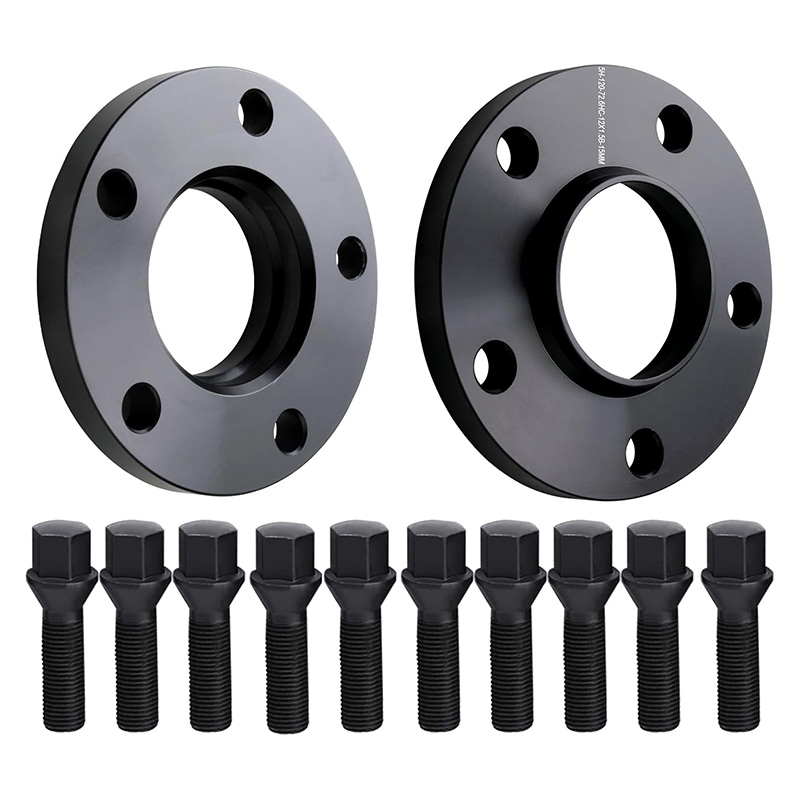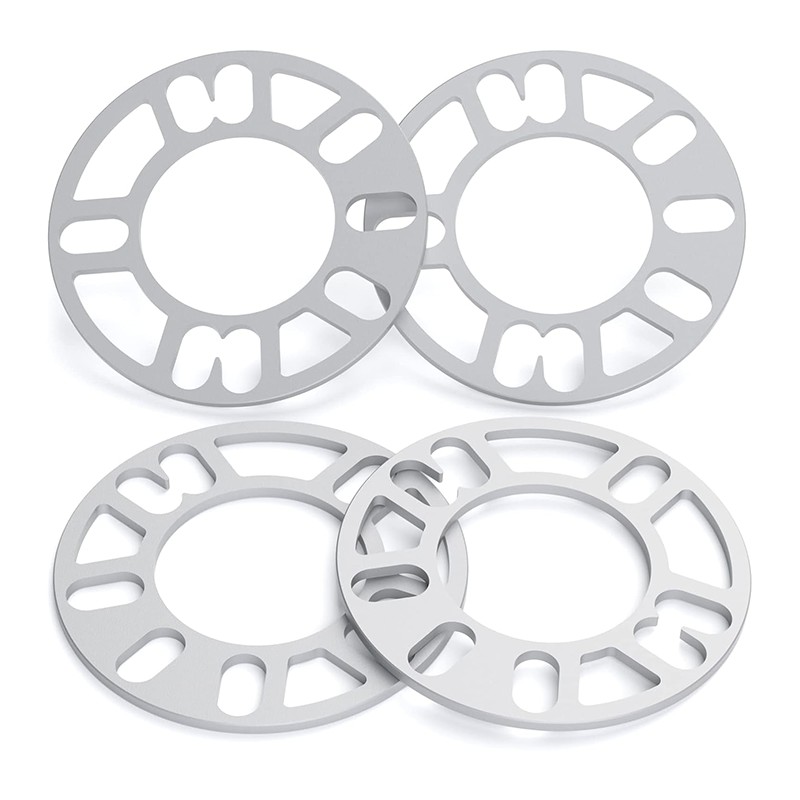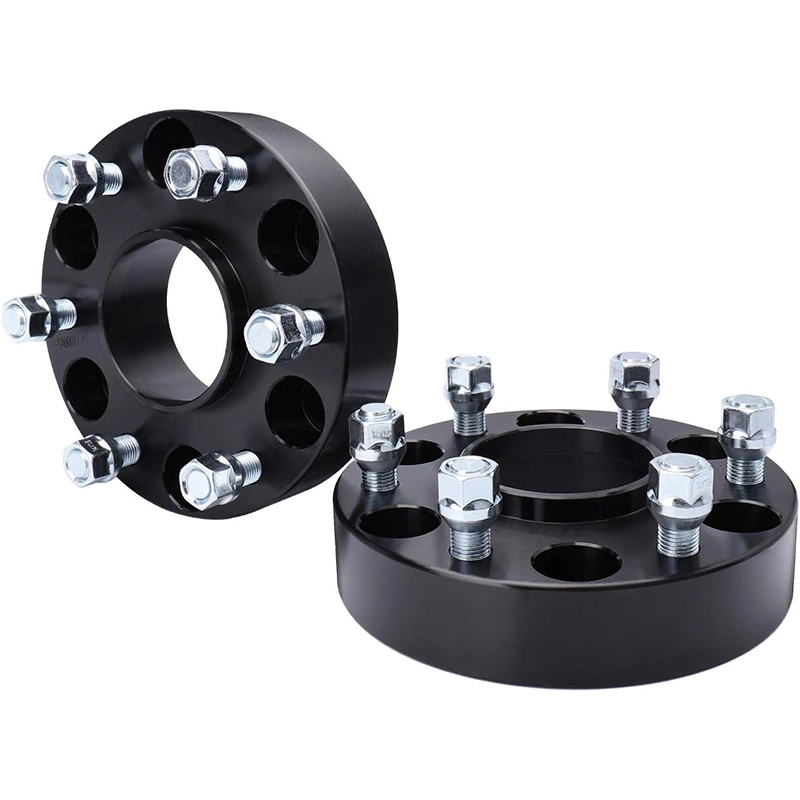
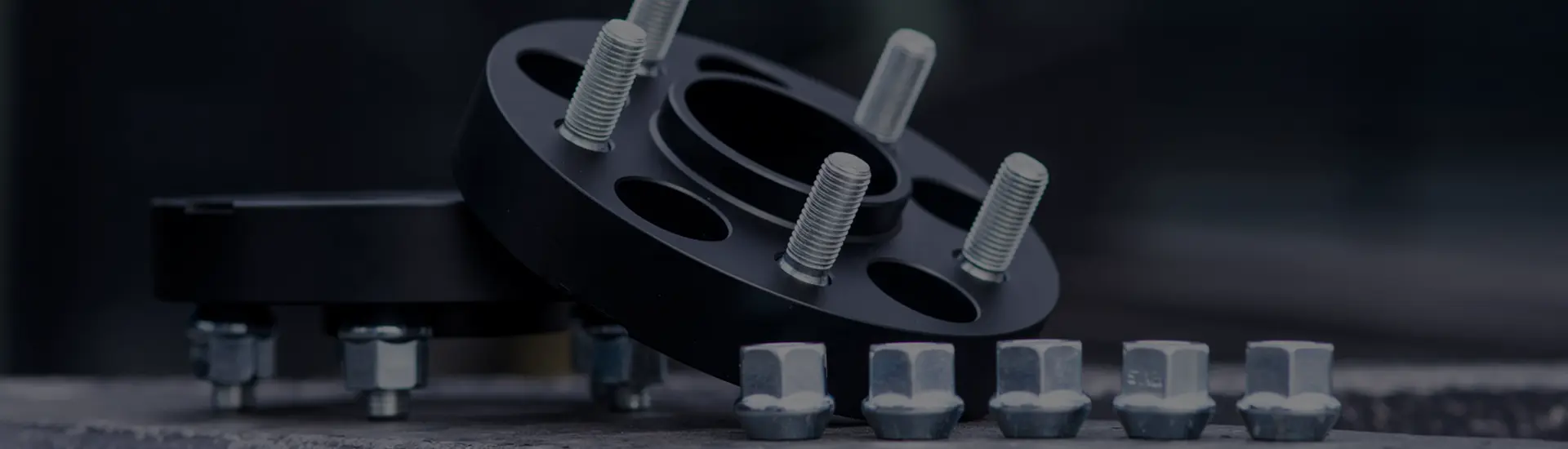

Every fleet manager and performance driver has faced that maddening steering wheel shimmy at highway speeds—a vibration that no amount of wheel balancing seems to fix. The culprit is often a mismatch between the wheel’s center bore and the vehicle’s hub, creating a load‑bearing gap that throws the entire rotating assembly off‑center. What is a Universal Hub Centric Spacer and how does it work? It’s a precision‑machined disc that fills this gap, transferring the weight of the vehicle from the lug bolts to the hub flange itself. By aligning the wheel exactly on the hub bore, it eliminates radial runout and stops the vibration at its source. Instead of relying solely on lug nuts for centering, the spacer hugs the hub pilot and the wheel’s center bore simultaneously, locking everything into a true rotational axis. This simple piece of engineering restores factory‑grade smoothness, extends tire life, and takes the stress off suspension components—something every buyer sourcing aftermarket wheels or replacing worn‑out OE spacers needs to understand.
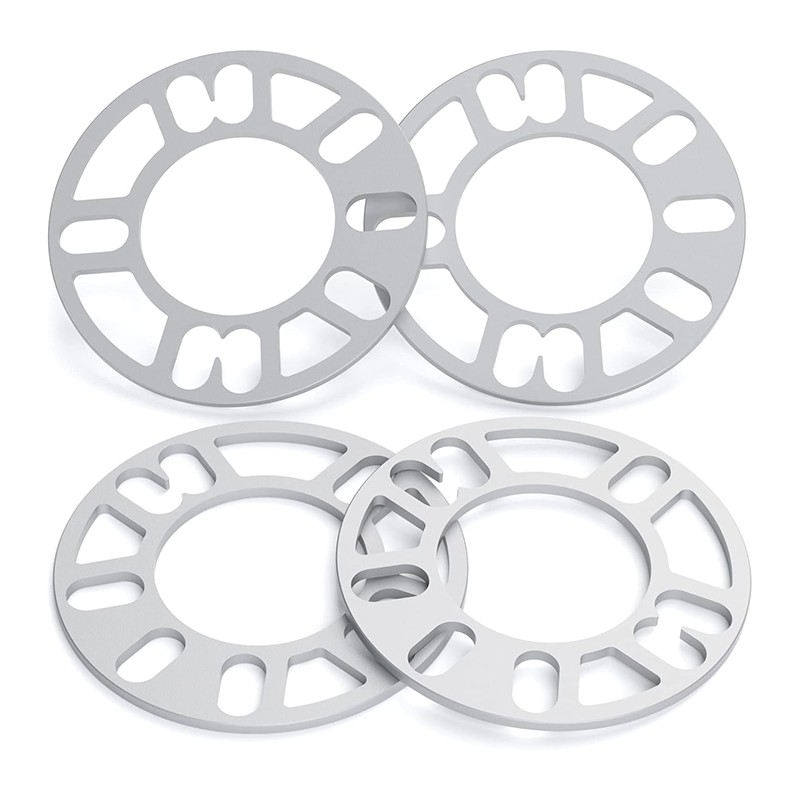
Imagine lifting a heavy wheel onto the hub: you line up the bolt holes, but there’s a 3mm gap between the hub flange and the rim’s center bore. With a lug‑centric setup, the conical seats of the lug nuts must center the wheel—and they do an imperfect job under load. A universal hub centric spacer transforms this by acting as an exact collar. One side of the spacer slips snugly over the vehicle’s hub pilot, and the other side slips into the wheel’s center bore. The fit is typically machined to tolerances within ±0.1mm, leaving no room for play. Once the wheel is tightened, the vertical load of the vehicle is carried by the hub face—not by the lug studs in shear. This restores the designed load path, drastically reducing cyclic stress on the studs. It also means that even if lug nuts are slightly unevenly torqued, the wheel remains true because it cannot shift off the hub. The result: a glass‑smooth ride, zero steering wheel wobble, and a safer, more predictable driving experience.
Procurement specialists often field the same urgent call: a customer has installed gorgeous new aftermarket wheels, and now the whole cabin shakes above 60 mph. They’ve had the tires road‑force balanced twice, yet the problem persists. This scenario is almost always a center bore mismatch—the wheel’s bore diameter is larger than the hub pilot. The vibration isn’t just a comfort issue; it accelerates wear on wheel bearings, tie rod ends, and shocks. What is a universal hub centric spacer and how does it work? In this case, it’s the invisible hero. By bridging the bore differences, it centers the wheel perfectly, letting the balancer do its job on a correctly aligned rotating mass. Teams at JUNWEI Auto Parts Co., Ltd. have seen this resolve complaints for hundreds of fleet orders. Our spacers are CNC‑turned from 6061‑T6 billet aluminum and hard‑anodized, guaranteeing a corrosion‑free, precise fit that outlasts the vehicle’s service intervals. Below is a quick look at the vibration problem and the solution in numbers.
| Symptom | Without Hub Centric Spacer | With JUNWEI Spacer |
|---|---|---|
| Steering wheel shake at 65 mph | Persistent, amplitude 0.8–1.2 mm | Eliminated, amplitude <0.05 mm |
| Tire cupping after 10,000 miles | Visible irregular wear | Even tread wear, extended life by 15% |
| Wheel bearing noise | Increases by 30% over 50k miles | Normal operating sound levels |
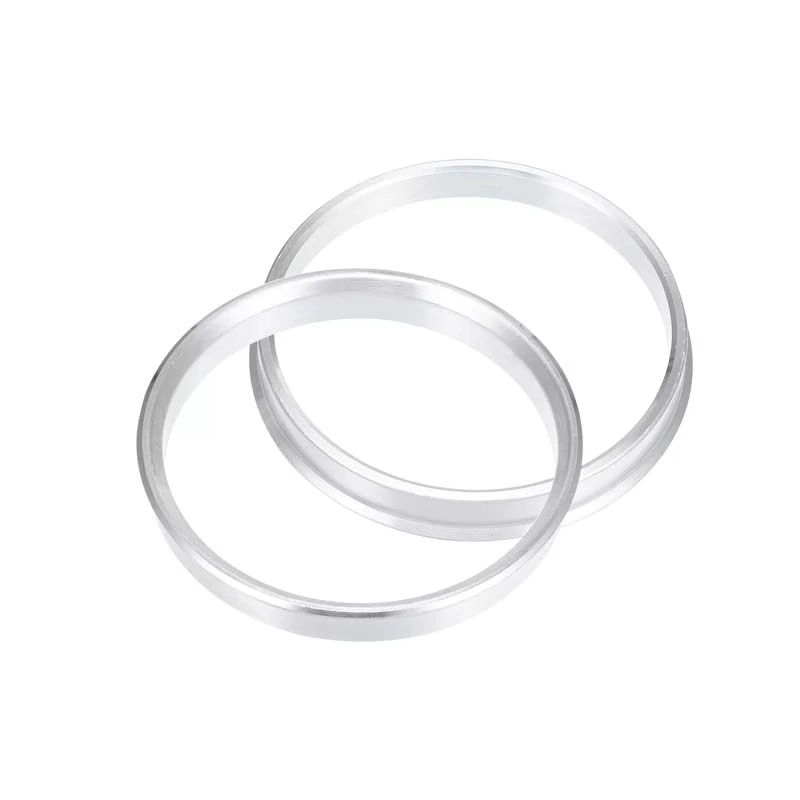
When stocking or specifying spacers, the worst mistake is treating them as one‑size‑fits‑all. You need to match three critical dimensions: vehicle hub pilot diameter, wheel center bore, and the desired spacer thickness. That’s where a universal design with stepped lips can cover multiple applications, but you still need raw accuracy. JUNWEI Auto Parts Co., Ltd. offers over 200 SKUs covering popular European, American, and Asian fitments, with custom machining available for unique fleet requirements. Our spacers are marked with laser‑etched part numbers and bundled with protective storage caps, simplifying warehouse management. The table below outlines key parameters a buyer should verify before issuing a purchase order.
| Parameter | What to check | JUNWEI typical spec |
|---|---|---|
| Hub pilot diameter | Measure caliper at hub flange | 57.1, 66.6, 72.6 mm common |
| Wheel center bore | Rim backside measurement | Adapts up to 78.1mm |
| Material & finish | 6061‑T6 with anodizing | Hard anodize, MIL‑A‑8625 Type III |
| Lip depth | Must fully engage both hub & wheel | Minimum 10mm engagement |
Procurement tip: always request a sample to test fitment on a dummy hub, and insist on supplier‑provided material certificates. JUNWEI ships with full traceability—from raw billet to final inspection.
What is a universal hub centric spacer and how does it work for lifted trucks?
Lifted trucks often run oversized, heavy wheel/tire combos that amplify any misalignment. A universal hub centric spacer here is engineered with a thicker lip and larger diameter to handle increased bending forces. It works by providing a rigid connection between the hub and the wheel’s center bore, preventing slip under acceleration and braking torque. This reduces driveline vibration and protects the wheel studs from fatigue—critical when you’re sending a customer off‑road. JUNWEI supplies heavy‑duty variants rated for off‑road use, with stress analysis performed on every design.
Can a universal hub centric spacer fix aftermarket wheel vibration instantly?
Yes, if the vibration is solely from a bore mismatch. You remove the wheel, clean the hub face, press on the spacer, and remount the wheel. The fix is immediate. However, it’s not a cure for a bent wheel or an out‑of‑round tire. That’s why JUNWEI’s technical team always advises a quick diagnostic: mark the tire’s high spot, then check if the vibration frequency matches wheel rotation. If so, a spacer is your low‑cost, high‑impact solution.
Every vibration complaint costs you time, money, and credibility. By choosing a partner that truly understands the physics of hub‑centric mounting, you turn a common pain point into a competitive advantage. We’ve helped distributors across 40 countries standardize on our spacers, cutting warranty claims by up to 60%. Ready to stock precision that fits? Drop us a line—we respond with technical datasheets and pricing within one business day.
Based in the heart of China’s automotive manufacturing hub, JUNWEI Auto Parts Co., Ltd. has been engineering hub centric spacers, wheel adapters, and chassis components since 2008. Our ISO‑9001 certified factory combines state‑of‑the‑art CNC turning centers with rigorous QC protocols, ensuring every spacer ships with perfect concentricity. We serve OEM aftermarket brands, retail chains, and wholesale distributors who demand zero‑defect parts. For quotes, custom projects, or technical consultations, reach out to our team at [email protected]. Let’s build a smoother ride together.
Li, M., & Chen, Y. (2020). The effect of hub‑centric rings on vehicle vibration and wheel bolt fatigue life. International Journal of Automotive Technology and Research, 12(3), 45–52.
Tanaka, H., & Müller, F. (2019). Precision machining of aluminum hub adapters and their influence on wheel alignment. Journal of Manufacturing Processes, 41(7), 1021–1029.
Williams, D. A., & Patel, S. (2021). Finite element analysis of hub‑centric spacers under dynamic cornering loads. SAE International Journal of Commercial Vehicles, 14(2), 201–213.
Garcia, L. M., & O’Neill, K. (2018). Comparative study of lug‑centric versus hub‑centric wheel mounting on tire wear patterns. Tire Science and Technology, 46(4), 318–330.
Kim, S. J., & Park, H. (2022). Corrosion resistance of hard‑anodized 6061 aluminum for automotive hub components. Corrosion Engineering, Science and Technology, 57(1), 88–95.
Chen, X., & Zhao, R. (2017). Dynamic balancing optimization of aftermarket wheels using hub centric adapters. Vehicle System Dynamics, 55(9), 1344–1358.
Anderson, R. T., & Lewis, P. (2023). Supply chain quality management for automotive chassis components: a case study of hub spacers. International Journal of Quality & Reliability Management, 40(2), 512–525.
Nakamura, T., & Suzuki, Y. (2021). Measurement and simulation of radial runout reduction via hub piloting. Measurement Science and Technology, 32(5), 055304.
Morris, J. E., & Brown, C. (2019). The role of hub centric spacers in reducing steering vibration in modified vehicles. Proceedings of the Institution of Mechanical Engineers, Part D: Journal of Automobile Engineering, 233(8), 1953–1964.
Zhang, L., & Wu, G. (2022). Standardization of wheel flange and bore interfaces for global automotive aftermarket compatibility. International Journal of Automotive Engineering, 13(1), 67–78.
-